
Since the pandemic, disinfection protocols and cleaning methods have evolved in leaps and bounds to help companies more strictly adhere to health and safety practices and improve conditions for their employees and clients.
Our commercial cleaning services are always improving so that we can offer our clients the maximum safety possible. Below, we’ve detailed the importance of developing disinfection protocols and how they can be implemented in your workplace.
The Benefits of Disinfection Protocols Post-Pandemic
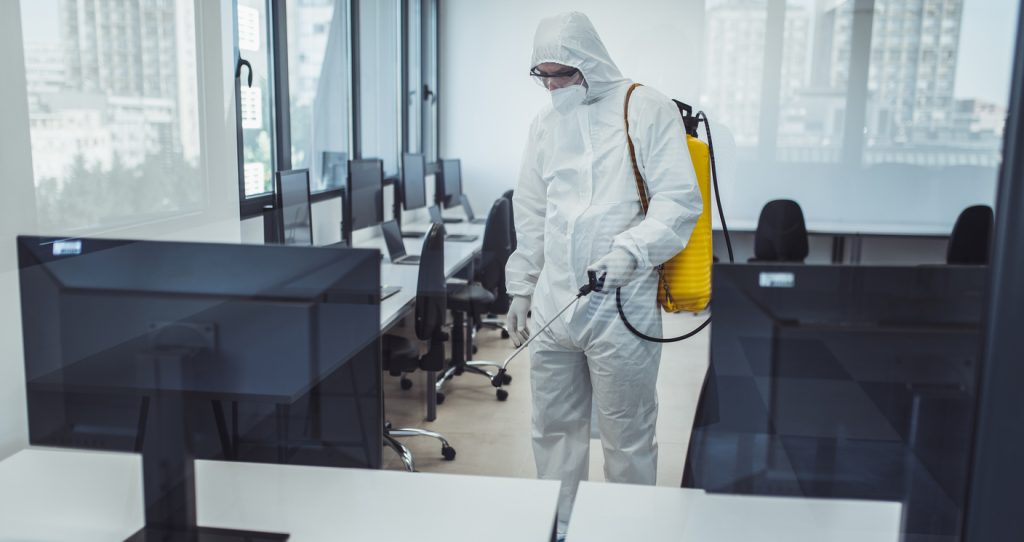
Post-pandemic commercial businesses have fostered a renewed sense of purpose in keeping office spaces clean so that employees can work in a healthy environment and clients can feel safe while receiving their services.
Keeping your office free of traces of infectious viruses and bacteria can help to boost the reputation of your company, building trust between you and your clients and encouraging business to bloom and thrive after a tempestuous period.
Exposure to a healthy and sanitised working environment will also boost employee morale, allowing them to feel more relaxed and comfortable in the workplace. This will improve the quality of work produced in your office and help you to present a professional front to your clients.
The Benefits of Our Disinfection Services
We strive to always put you and your business first when implementing our disinfection processes in your office, taking full responsibility for your employee’s and clients’ health and well-being.
Our services are offered in a cost-effective customised cleaning plan that targets the areas of your office that have been exposed to infection so that you are always getting the service you need when you need it.
Our targeted cleaning processes allow us to ensure that there is no cross-contamination between the different areas of your office, helping us to keep the infectious germs contained. With our strategies, your office will be cleaned swiftly and efficiently, enabling you to get back up and running as soon as possible.
Post-Pandemic Disinfection Cleaning Methods
Due to the constant developments and improvements across the cleaning industry, there are always new cleaning innovations and technologies that help us to provide better and more effective disinfection protocols.
The pandemic played a key factor in ensuring experts in the cleaning industry continue to innovate, with new automated and hands-free cleaning technologies helping our cleaners to stay safe while they disinfect your surfaces.
1. Deep Cleaning Disinfection
Deep cleaning is one of the most common disinfection services offered to companies that has proven effective in removing germs and bacteria on a deeper level, leaving your office healthier than ever, especially when compared to regular surface cleaning.
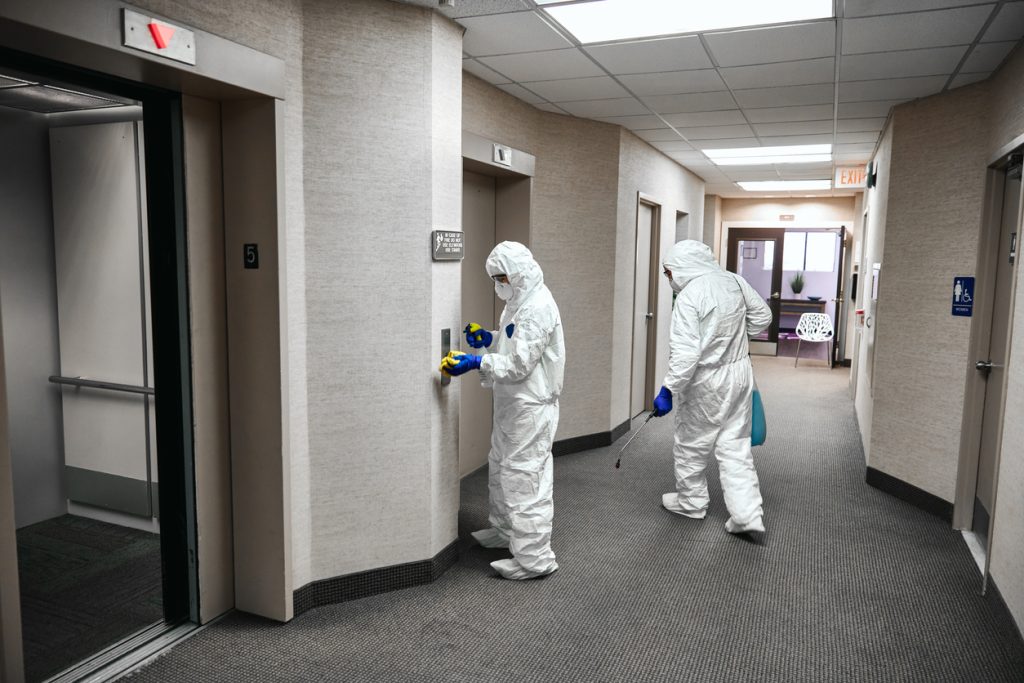
The intensiveness of deep clean disinfection will focus on sanitising hotspots in the office where infectious germs can gather. These include:
- Light switches
- Door handles
- Sink taps
- Reception areas
- Desk chairs
- Waiting room chairs
- Narrow hallways
- Room entryways
Our professional cleaners will manage their tasks effectively, tackling each hotspot individually to avoid contaminating cleaned areas and helping you to implement preventative measures such as plexiglass dividers and hand sanitiser to keep your office hotspots healthier for longer.
2. Fogging Disinfection
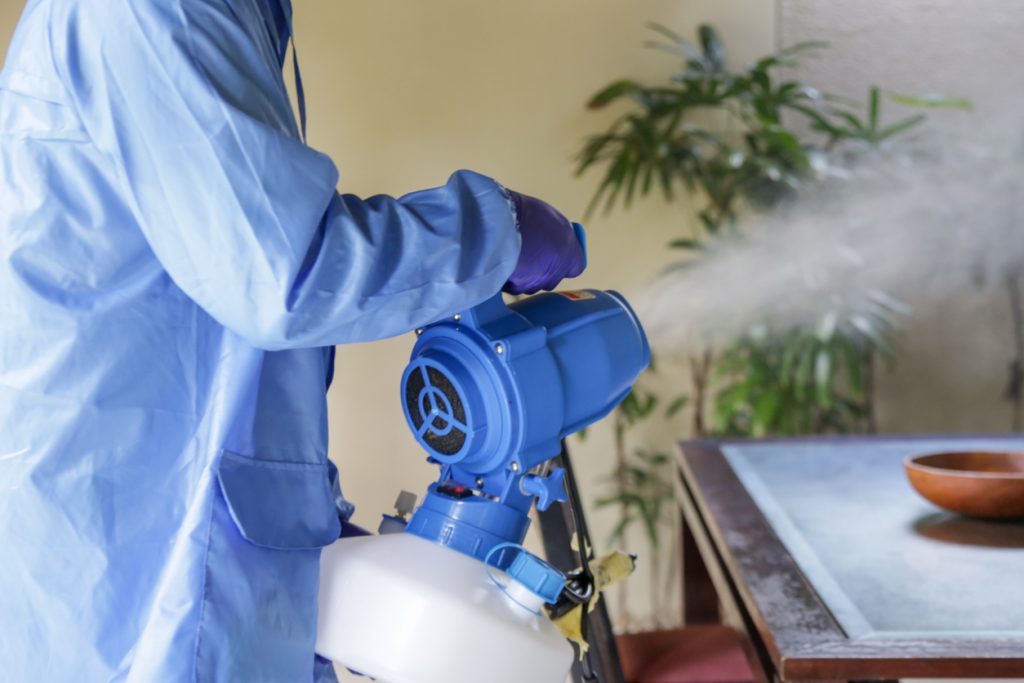
In the event of an infectious outbreak, fogging often goes hand in hand with a deep clean to provide a more thorough elimination of the bacteria.
Fogging is a process involving a specialised machine that sprays a fine disinfectant solution into the air, killing airborne pathogens so that your employees can breathe clean and unpolluted air.
The mist will disperse through the air and settle on your surfaces for an even coverage, reaching the out-of-reach corners of your office that can’t be reached otherwise and providing you with full disinfection.
In order to keep you and your employees safe, you will be evacuated from the infected area during the fogging process, protecting you from the chemicals. You should not re-enter the workplace for a few hours in order to let the mist do its work and disperse completely. Windows and doors will be left open to encourage air circulation.
3. Smart Technology
Smart cleaning technology has had a strong impact on the cleaning industry in recent years, streamlining the disinfection process. In the wake of the pandemic, it also provides a variety of alternative cleaning options that allow our cleaners to stay safe and keep some distance from harmful bacteria and pathogens.
The big draw of using smart technology for disinfection protocols is the hands-free approach, allowing us to supplement our cleaning processes without sacrificing the high quality you’re accustomed to.
Some of the recent developments in smart cleaning technology include:
- Robotic vacuums
- Robotic drones to clean windows on high levels
- UV sanitisers that use electromagnetic radiation to kill bacteria
- Smart mops and floor cleaners that use sensors and cleaning algorithms
- Smart trash cans with motion sensors and touchless controls
Smart cleaning technology also extends to management processes, with our professional cleaners utilising AI and the Internet of Things (IoT) to organise our cleaning schedules. This allows us to tackle your office systematically to avoid contaminating clean areas and ensure the disinfection service is consistent across the board.
4. Air Purification Systems
Air purification and filtration are important office cleaning factors in the wake of the pandemic, allowing professional commercial cleaners to ensure that indoor air pollution is kept to a minimum.
This provides a comprehensive and hands-off approach to keeping pollutants and airborne pathogens out of your office with innovative air filtration systems that pull in allergens and pollutants using a fan and cycle clean air back out into the room.
Photocatalytic oxidation (PCO) and radiant catalytic ionisation (RCI) technology use UV-C lighting to trigger chemical reactions that break down and destroy bacteria for more effective air purification.
UV air filtration will help to eliminate infectious bacteria and germs more thoroughly, with the constant boosting of clean air providing a consistent foundation of cleanliness that protects people from becoming infected over a longer span of time.
5. Electrostatic Disinfection
Another touchless cleaning innovation, electrostatic disinfection provides an even coverage when cleaning your surfaces, safely eliminating traces of infectious viruses and bacteria on your surfaces with as little risk as possible.
The disinfectant solution will be inserted into a special spray bottle that when used, will charge the solution with an electrode for a positive charge. The particles of the disinfectant will then repel each other when they are sprayed, bonding with the negatively charged surface over a large area.
The cleaning solution will then dry on its own, negating the need for cleaners to dry the surface, allowing them to focus their time on other important tasks.
Electrostatic disinfection is often a quicker cleaning process. In the event of an emergency, our cleaners will use this process to disinfect your office swiftly and efficiently, letting you get back to work in record time without putting your health and well-being at risk.
How to Implement Post-Pandemic Disinfection in the Office
There are a number of cleaning practices we can help you to put in place in the office that can prevent infectious bacteria from growing and foster a safer working environment for your employees.
Touchless Technology
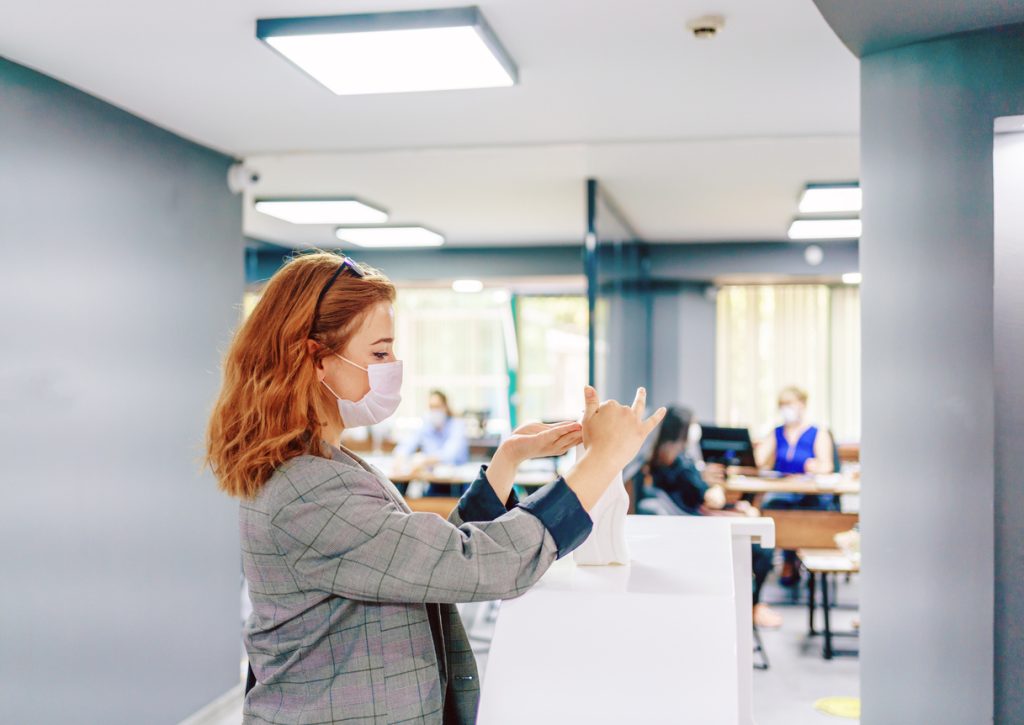
As with touchless cleaning processes, touchless technology in the workplace itself can also provide a solid line of defence at halting the spread of a virus.
Installing automatic doors, automatic taps and touchless light switches reduces the amount of surface risks and germ hotspots in the office. With less high-risk areas in the office for germs to gather, cleaning work can become more streamlined and efficient.
Disinfecting Surfaces
A number of infectious germs and bacteria live on surfaces, so installing antimicrobial surfaces in the workplace can help to deter germs from settling and spreading.
Surfaces can be coated with an antimicrobial agent that can kill bacteria. Antimicrobial surfaces can be created using metal-based solutions such as silver or copper, applying coating with a polymer brush, or using an anti-adhesive substance.
For surfaces that haven’t been proofed against bacterial growth, the standard cleaning procedures apply. Common surface materials include:
- Wood – clean wooden surfaces with a mild solution. Make sure not to use too much water as this will warp and damage the material.
- Metal – avoid using abrasive cloths and materials so that you don’t scratch the surface.
- Plastic – like with metal, abrasive cloths can scratch the surface. Use a mild cleaning solution.
Colour Coding Disinfection Protocols
The key to effective disinfection in a post-pandemic commercial world is to avoid cross-contamination between clean areas and infected areas.
Colour coding the cleaning process will help you to keep track of which rooms have been disinfected so you can make sure contaminated cleaning products and waste are kept out of the clean areas, creating a safe environment for employees outside of infected zones.
Disinfection protocols are always evolving in the cleaning industry, with the pandemic and its aftermath prompting new innovations and developments in order to keep you and your employees safe.